
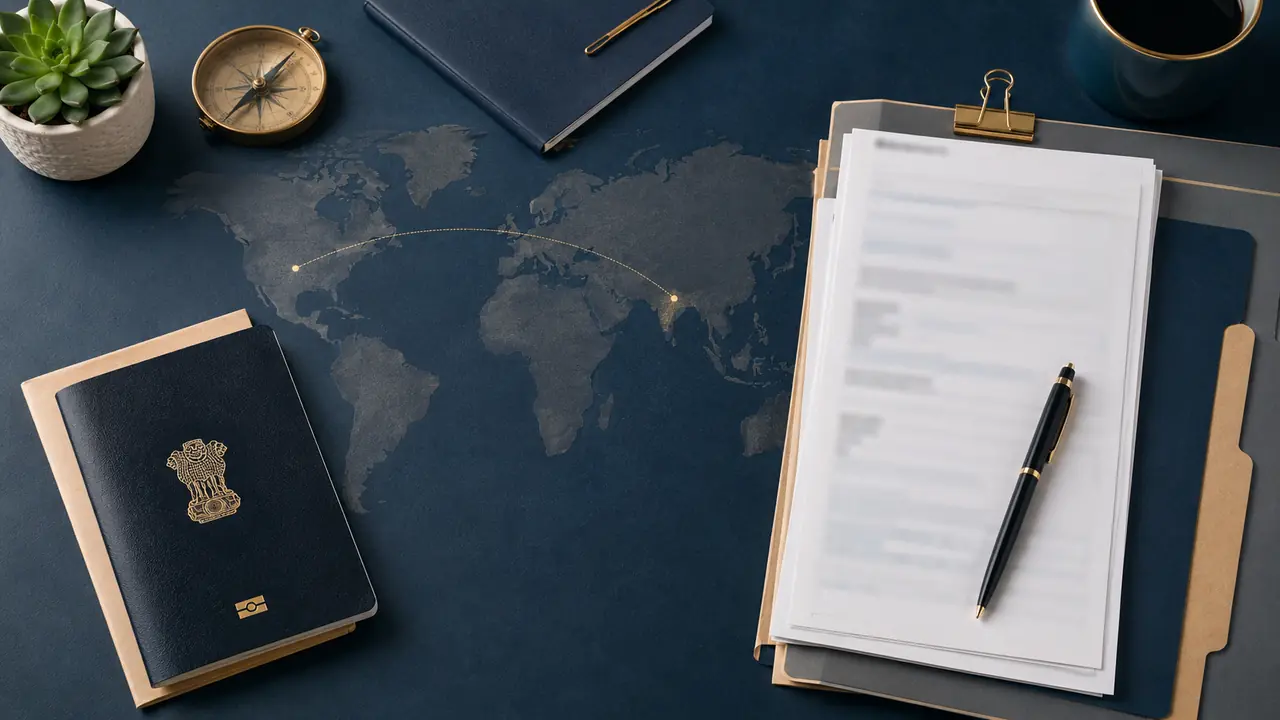
A U.S. immigrant visa case normally begins before the visa application itself. A qualifying petitioner first asks U.S. Citizenship and Immigration Services (USCIS) to recognise the family or employment basis. Approval of that petition allows the case to move forward; it does not guarantee the immigrant visa.
Who can file an immigrant petition?
Family petitions — Form I-130
A U.S. citizen, lawful permanent resident or qualifying U.S. national may file Form I-130 for eligible relatives. The relationships available depend on the petitioner’s own status. For example, U.S. citizens can generally petition for a spouse, children, parents (when the citizen is at least 21) and siblings (when the citizen is at least 21). Lawful permanent residents have narrower qualifying categories, commonly a spouse and eligible unmarried children.
Employment petitions — Form I-140
A U.S. employer commonly files for a foreign worker in an employment-based category. Some categories permit self-petitioning—for example, certain persons of extraordinary ability or eligible national-interest-waiver cases—but the legal evidence can be demanding.
Other petition types
Special immigrant, widow(er), humanitarian and investor routes may use different forms such as I-360 or I-526E. The correct form depends on the statutory category, not on personal preference.
U.S. consular immigration process, step by step
Petition is filed with USCIS
The petitioner submits the correct form, fee and supporting evidence. USCIS may approve, deny or request more evidence.
Priority date and visa availability
Immediate relatives of U.S. citizens are not numerically capped in the same way as preference categories. Family and employment preference cases may wait for the priority date to become current under the Visa Bulletin.
Case moves to the National Visa Center
After approval and when processing can advance, NVC creates the case and requests fees, the DS-260 immigrant visa application and supporting records.
Financial and civil documents are submitted
Family cases commonly need an Affidavit of Support. Applicants submit required civil documents such as passports, birth/marriage records and police certificates under country-specific rules.
Medical examination and interview
The applicant completes the medical examination with an authorised physician and attends the scheduled embassy or consulate interview with original documents.
Decision and travel
If issued, the applicant follows the instructions for passport return, any immigrant fee and travel before the visa expires. Admission as a permanent resident occurs at the U.S. port of entry.
Documents commonly involved
- Valid passport and photographs meeting current specifications.
- Birth, marriage, divorce, adoption or name-change evidence as relevant.
- Police certificates from required countries and court/prison records if applicable.
- Petitioner’s proof of U.S. citizenship or permanent residence.
- Relationship evidence for family cases.
- Employment, qualification or business evidence for employment cases.
- Affidavit of Support and financial evidence where required.
- Certified translations for documents not accepted in their original language.
Important distinctions
- Petition approval is not visa approval. Admissibility is separately assessed.
- Processing time is not only queue time. Visa availability, document completeness, administrative processing and individual facts matter.
- Never hide previous refusals, arrests or immigration history. Answer the official forms accurately.
- Derivative family eligibility varies. Immediate-relative, preference and employment categories have different rules.
Official references
Use the U.S. Department of State’s Immigrant Visa Process, USCIS Form I-130 page and current Visa Bulletin. For legal questions or complex inadmissibility issues, consult a qualified U.S. immigration attorney.